
Kente is often described as a fabric, a textile, a fashion tradition, or an art form. All of these descriptions are correct. But they may not tell the whole story.
Kente can also be approached as a visual language—one in which colour, pattern, repetition, arrangement, history, and cultural knowledge come together to communicate ideas.
For Hinkro Kente, this way of looking at Kente opens up a deeper question:
What if Kente is not simply something we look at, but something we learn to read?
Kente patterns and meanings form a visual language
When we see a Kente cloth, our first instinct may be to notice its colours and patterns. We might admire the intricacy of the weaving or identify a familiar motif. But the individual elements are only part of the story.
Think about ordinary written language. Knowing what individual letters look like does not necessarily mean we understand a sentence. Meaning comes from the relationship between the letters, their order, context, and structure.
Kente can invite a similar way of thinking:
- The thread is the medium.
- Colour forms part of the vocabulary.
- Patterns and motifs act as signs.
- Repetition and placement create structure.
- Proverbs, history, philosophy, and cultural knowledge provide context.
- The finished cloth becomes a composition capable of communicating an idea.
This does not mean that Kente functions exactly like a written alphabet. Rather, it encourages us to recognize that communication does not have to depend on ink and paper.
How to begin reading a Kente cloth
Understanding Kente requires more than identifying colours or recognizing attractive patterns. A useful starting point is to ask questions.
What colours are present?
Colours can carry cultural associations connected to ideas such as spirituality, maturity, peace, growth, vitality, royalty, prosperity, purity, and transition. But colour should rarely be interpreted in isolation. Our guide to the meaning of Kente cloth colours offers a useful introduction to this part of the visual vocabulary.
What patterns are present?
Look closely at the shapes being created. Are there paths, intersections, opposing forms, repeated blocks, changes in direction, or tightly interwoven sections?
Some Kente patterns have recognized names and associations connected to Akan proverbs, people, historical events, and philosophical ideas. Knowing these associations can add another layer to what we see in the cloth.
What repeats?
Repetition can be significant because meaning may not reside in one isolated symbol. Instead, a larger recurring idea may emerge through the way elements appear again and again.
Meaning lives in the relationships between patterns
One of the most important aspects of reading Kente is understanding relationships.
- What appears before one pattern?
- What comes after it?
- How does one motif interact with another?
- Where does the design change?
- What remains constant?
These questions move us beyond simply identifying individual symbols toward understanding the composition as a whole.
A pattern may lead us to a name. A name may lead us to a proverb. A proverb may lead us to history or philosophy. And its relationship with other patterns may create yet another layer of meaning.
This is why reducing Kente symbolism to statements such as “red means this” or “green means that” can sometimes be too simplistic. The meaning of Kente can exist not only within individual elements, but also within the relationships between those elements.
The loom as a writing instrument
This perspective gives us an interesting way to think about the weaving process itself.
If writing uses an instrument to place marks onto a surface, weaving uses a loom to organize threads into patterns.
- The loom becomes the writing instrument.
- The thread becomes the inscription.
- The patterns carry knowledge.
- The weaver, through skill and cultural understanding, brings these elements together into a composition.
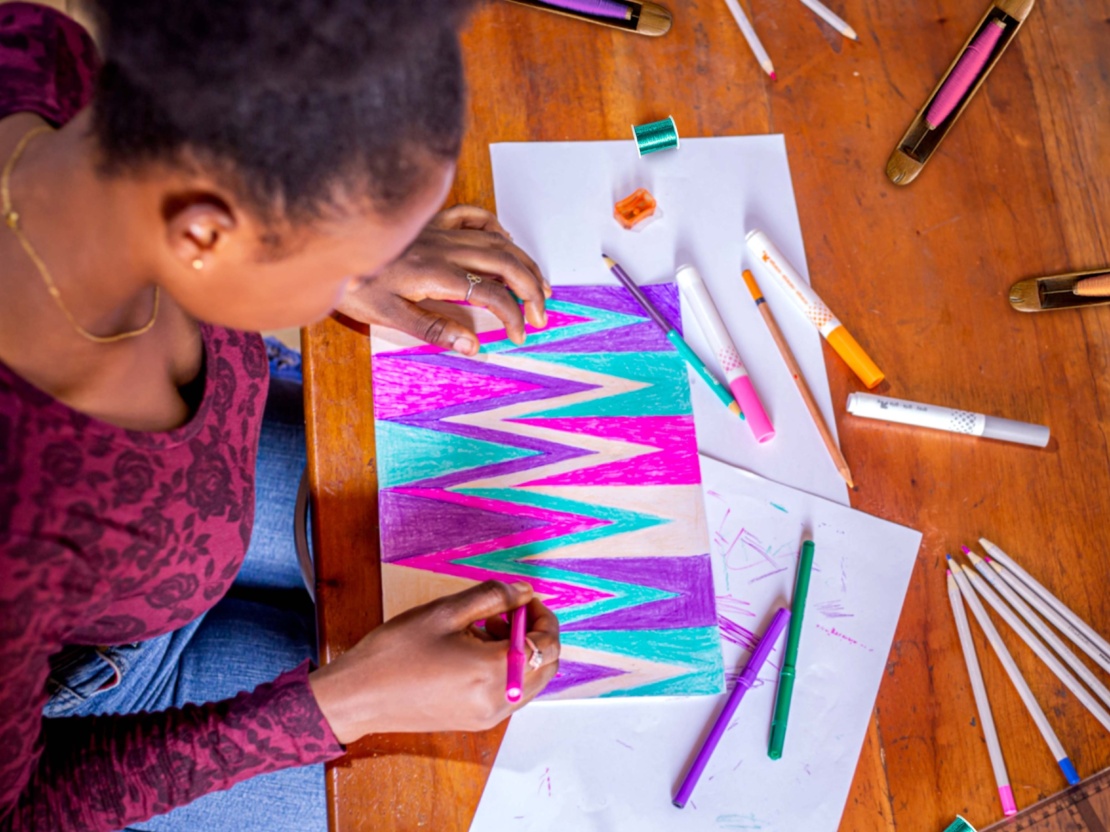
This does not require us to claim that Kente is an alphabet in the conventional sense. Instead, it allows us to appreciate Kente as a system through which cultural ideas can be preserved, recognized, and communicated visually. The process of developing Kente patterns for weaving shows how intention and craftsmanship meet before the first strip is completed.
Kente carries cultural memory
Kente carries more than colour and structure. It can carry memory.
Within its patterns and names can exist references to proverbs, values, historical experiences, leadership, spirituality, relationships, and ideas about life.
This is one reason the knowledge surrounding Kente is just as important as the physical cloth. A person can admire a Kente design aesthetically without knowing its cultural reference. But when we understand the knowledge behind the design, the cloth can become something much more profound.
It becomes a conversation between the past and the present. It becomes a way of remembering. It becomes a way of communicating. And it becomes a reminder that cultural knowledge can be preserved in forms beyond conventional writing.
Looking at Kente versus reading Kente
Perhaps the difference is simple:
Looking at Kente asks, What do I see?
Reading Kente asks, What is this composition communicating?
To begin reading a Kente design, consider:
- What colours are present?
- What patterns are present?
- What do those patterns traditionally reference?
- How are the elements arranged?
- What repeats?
- What changes?
- What relationships emerge?
- What larger idea does the entire composition communicate?
These questions encourage a deeper engagement with Kente. They also remind us that the beauty of Kente is not only in how it looks. Its beauty can also be found in the knowledge, intention, and cultural memory woven into it.
More than something to wear
Kente does not need to resemble an alphabet to communicate. It does not need letters to carry meaning. Its language can exist through colour, form, pattern, repetition, arrangement, name, proverb, history, and context.
That is what makes Kente so powerful.
Every woven strip can be appreciated as craftsmanship. Every pattern can be appreciated as design. But when we begin to understand the cultural knowledge behind those elements, we can begin to see Kente differently.
We stop seeing only fabric. We begin to see a visual language.
And perhaps that is one of the most meaningful ways to approach Kente today: not simply as something to wear, but as something to look at, understand, remember, and read.
At Hinkro Kente, we believe that the future of Kente is not only about preserving the cloth, but also about preserving and deepening our understanding of the stories, ideas, and cultural knowledge woven into it. Explore our Kente design process to see how we turn personal ideas into woven compositions.