
Crafting the Perfect Kente: A Comprehensive Guide to Authentic African Kente Fabric
Kente cloth stands as one of the most celebrated textiles in human history — a fabric that is simultaneously an art form, a language, a cultural archive, and a wearable symbol of identity. Whether you are a first-time buyer, a fashion enthusiast, a cultural scholar, or someone preparing for a significant life event, this comprehensive guide will walk you through everything you need to know about authentic African kente fabric, from its ancient origins to the practical considerations of buying and caring for it today.
A Living History
Kente cloth originates from Ghana, with two primary traditions: Ashanti kente from the Ashanti Kingdom (central Ghana) and Ewe kente from the Volta Region (eastern Ghana). The Ashanti tradition, centred in the legendary village of Bonwire, is generally dated to the 17th century, though some oral traditions suggest earlier origins. The Ewe tradition developed independently, with its own distinct aesthetic vocabulary.
Historically, kente was a royal textile — cloth reserved for kings, chiefs, and ceremonies of the highest importance. The Ashanti king (Asantehene) was the ultimate patron of kente weaving, and specific patterns were created exclusively for royal use. Over time, kente became accessible to broader segments of society, but it has never lost its association with excellence, dignity, and cultural significance.
In the 20th century, leaders like Kwame Nkrumah transformed kente into a symbol of pan-African identity, wearing it on the world stage and connecting it to the broader narrative of African liberation. Today, kente is recognised globally as one of Africa's greatest cultural exports.
The Weaving Process: From Thread to Cloth
Understanding how kente is made deepens your appreciation of every piece:
Step 1: Thread Preparation
Yarns — typically cotton, silk, or a blend — are wound onto spools and arranged according to the planned pattern. Colours are either pre-dyed or selected from already-dyed stock. The quality of the thread determines the drape, vibrancy, and longevity of the finished cloth.
Step 2: Warp Setup
The weaver sets the warp threads (longitudinal threads) on the loom under precise tension. The warp provides the structural foundation of the cloth, and its arrangement determines the maximum width of each strip.
Step 3: Weaving
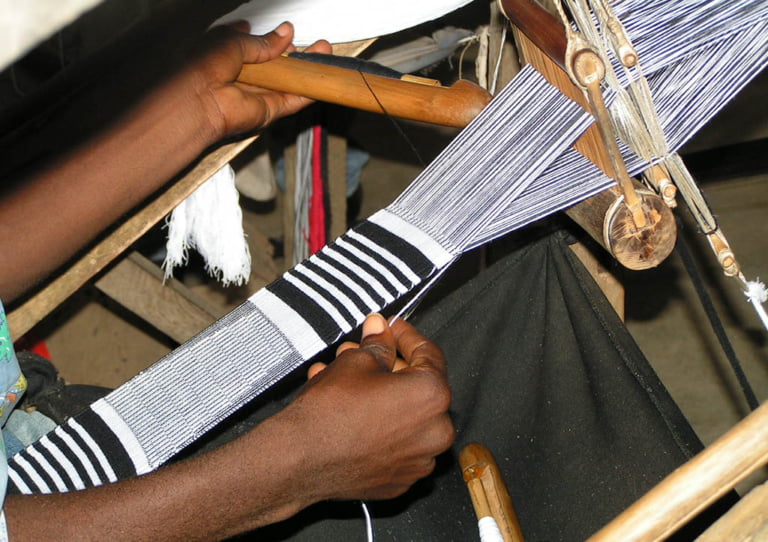
This is where the magic happens. Using a narrow-strip loom, the weaver interlaces weft threads through the warp, creating patterns row by row. Complex patterns require the weaver to manually select which warp threads to raise for each pass of the shuttle — a process that demands extraordinary concentration and skill. A simple pattern might take days; a complex adweneasa design can take weeks or months.
Step 4: Strip Joining
Each strip is woven individually, typically 10-15 centimetres wide. Once complete, strips are carefully aligned and sewn together edge-to-edge. A full-size kente cloth requires 24 or more strips, and the joining process requires precision to ensure pattern continuity across seams.
Step 5: Finishing
Edges are finished, fringe is added (typically at the ends), and the cloth is pressed. Quality finishing is what separates an exceptional kente cloth from an adequate one.
Pattern Meanings: The Visual Language of Kente
Every kente pattern has a name and a meaning. Understanding these meanings transforms kente from a beautiful fabric into a communicative medium:
- Adweneasa ("my skill is exhausted") — the pinnacle of kente design complexity. This pattern demonstrates the weaver's mastery and symbolises innovation and excellence.
- Sika Futuro ("gold dust") — represents wealth, prosperity, and the preciousness of knowledge. Commonly used for graduation stoles and ceremonial attire.
- Oyokoman — named after the Oyoko royal clan, representing leadership, governance, and statesmanship.
- Fathia Fata Nkrumah ("Fathia deserves Nkrumah") — created to celebrate the marriage of Kwame Nkrumah to Fathia Halim Ritzk. This pattern is a beautiful example of how kente records historical events.
- Aberewa Ben ("old woman's chin") — representing wisdom and the beauty of age. Often chosen by elder women for significant occasions.
- Babadua (" fence") — a pattern of interlocking blocks that symbolises cooperation and unity.
At Hinkro Kente, every custom order includes a pattern meaning card that explains the symbolism of the design you have chosen, ensuring your kente carries the message you intend.
Quality Indicators: How to Spot Authentic Kente
With machine-made imitations flooding the market, knowing how to identify quality kente is essential:
- Weave density — authentic kente has a tight, dense weave. Run your fingers across the surface — it should feel substantial and structured, not thin or flimsy.
- Pattern precision — hand-woven patterns have crisp colour transitions and geometric precision, with subtle variations that indicate human craftsmanship rather than machine uniformity.
- Strip construction — look for the visible seams where individual strips have been joined. This is a hallmark of authentic strip-woven kente.
- Weight — quality kente is heavier than printed imitations. A full-size cloth should have noticeable heft.
- Colour depth — dyed kente colours should be rich and saturated, not faded or washed out. Quality dyes resist fading even after multiple washes.
- Edge finishing — the selvedge edges of each strip should be clean and tight. Fringe should be evenly trimmed and secured.
A Complete Buying Guide
When purchasing kente, whether for yourself or as a gift, consider these factors:
Purpose and Occasion
Different occasions call for different types of kente:
- Graduation — stoles or sashes in patterns like Sika Futuro or Adweneasa.
- Wedding — full wraps or stoles in auspicious colours (gold, white, green).
- Cultural event — any traditional pattern appropriate to your cultural context.
- Fashion — contemporary designs that adapt kente patterns for modern wear.
- Home décor — larger cloths or panels for framing, upholstery, or display.
Budget
Authentic hand-woven kente is an investment. Prices vary based on size, complexity, and materials:
- Stoles and sashes — the most accessible entry point for authentic kente.
- Half-cloths — mid-range option suitable for wraps and larger accessories.
- Full cloths — premium investment pieces for ceremonial wear or display.
At Hinkro, we offer options across these price points, ensuring that authentic kente is accessible without compromising on quality.
Authenticity
Always purchase from a source that guarantees hand-woven authenticity. Ask for documentation of origin. Look for the characteristics described in the quality indicators above. Avoid suspiciously cheap "kente" that may be machine-printed cotton.
Care and Maintenance
Proper care ensures your kente lasts for generations:
- Washing — hand wash in cool water with mild detergent. Avoid bleach and harsh chemicals. If machine washing is necessary, use a gentle cycle in a mesh laundry bag.
- Drying — air dry flat in the shade. Direct sunlight can fade colours over time. Never tumble dry kente.
- Ironing — iron on a medium setting with a cloth barrier between the iron and the kente surface. Iron on the reverse side to protect pattern detail.
- Storage — store folded in a cool, dry place away from direct sunlight. Acid-free tissue paper between folds prevents colour transfer. Avoid hanging kente, as the weight can distort the weave over time.
- Professional care — for valuable or heirloom pieces, consider professional textile cleaning and conservation.
Why Choose Hinkro Kente?
In a market where authenticity is increasingly difficult to verify, Hinkro Kente provides certainty. Every piece we offer is:
- Hand-woven in Ghana — by master artisans in our verified network.
- Quality-inspected — through our rigorous multi-point quality control process.
- Fully documented — with certificates of authenticity and pattern meaning cards.
- Carefully shipped — in premium packaging to ensure perfect condition on arrival.
- Backed by expertise — our consultants are knowledgeable about kente history, patterns, and cultural context.
We don't just sell kente — we honour it.
Begin Your Kente Journey
Kente cloth is more than a fabric — it is a conversation between past and future, a wearable work of art, and a profound expression of identity. Whether you are commissioning a custom piece for a milestone event or simply want to own an authentic piece of African heritage, Hinkro Kente is here to guide you. Explore our collection, contact us for a custom consultation, or visit our website to begin your journey into the extraordinary world of authentic Ghanaian kente.