
Ankara Fabric vs. Kente Fabric: History, Production, and Design
When it comes to iconic African textiles, two names dominate the conversation: Ankara and Kente. Both are vibrant, both are culturally significant, and both have become global symbols of African fashion. But they are fundamentally different fabrics with distinct histories, production methods, and cultural roles. Understanding these differences is essential for anyone who wants to appreciate, wear, or work with these extraordinary textiles.
The History of Ankara Fabric
Ankara — also known as African wax print — has a surprisingly complex origin story. The fabric traces its roots to Dutch wax-resist textile production, originally developed in the Netherlands in the 19th century as an imitation of Indonesian batik. Dutch manufacturers brought these prints to West Africa, where they were enthusiastically adopted and eventually became synonymous with African fashion.
Over time, West African markets developed their own preferences, and manufacturers began producing designs specifically tailored to African tastes. Today, Ankara is produced across Africa and has become one of the most recognisable textiles on the continent. Its history is a story of cultural adoption and reinterpretation — a testament to Africa's ability to transform external influences into something unmistakably its own.
The History of Kente Fabric
Kente, by contrast, is indigenous to Ghana with roots stretching back centuries. Originating in the Ashanti Kingdom and independently developed by the Ewe people, kente was historically reserved for royalty and sacred occasions. Unlike Ankara, kente has never been industrially reproduced — every authentic piece is hand-woven on traditional looms, making it one of the last truly artisanal textiles in mass production.
Kente's cultural significance is immense. It has been worn by kings, carried into independence ceremonies, and adopted as a symbol of Pan-African identity worldwide.
Production Methods
How Ankara Is Made
Ankara production is an industrial process:
- Cotton base fabric is manufactured in mills.
- Designs are printed using a wax-resist or direct-print method.
- Fabric is dyed, with the wax creating areas of colour resistance.
- The finished fabric is produced in large bolts, typically in 12-yard lengths.
This industrial scale makes Ankara widely available and relatively affordable. A standard length of quality Ankara fabric typically costs a fraction of what a comparable length of hand-woven kente would cost.
How Kente Is Made
Kente production is an artisanal process:
- Yarns are prepared and dyed by hand.
- Patterns are set on a narrow-strip loom.
- Individual strips (approximately 10-15 cm wide) are woven one at a time.
- Strips are sewn together to create the full cloth.
A single kente cloth can take weeks or months to produce. This time-intensive process is why kente commands higher prices and is valued as wearable art.
Design Characteristics
Ankara Design
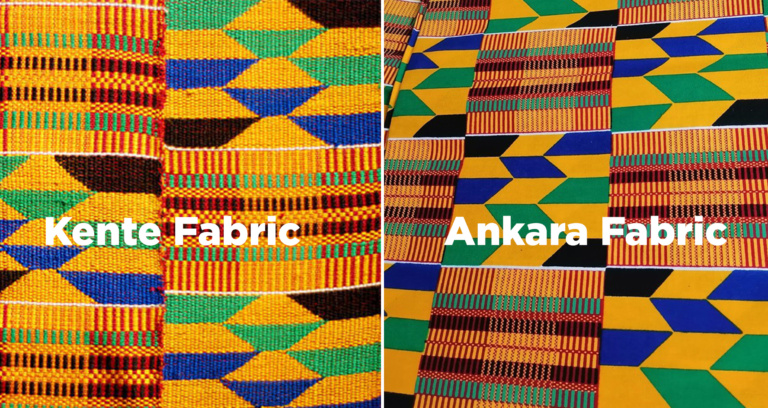
Ankara is characterised by bold, graphic prints — large-scale floral motifs, geometric patterns, figurative designs, and increasingly, custom prints featuring faces, text, and photographic imagery. The designs are vibrant and unapologetically eye-catching. Because it is printed rather than woven, Ankara offers virtually unlimited design possibilities and can be produced in any colour combination imaginable.
Kente Design
Kente patterns are woven into the fabric, not printed on top of it. This means every design element must be planned within the constraints of the loom. Kente patterns are predominantly geometric — stripes, chevrons, blocks, and zigzags — with colour combinations that follow traditional symbolic rules. Each pattern has a name and a specific cultural meaning, making kente design a form of encoded communication.
Cultural Roles
Both fabrics play important cultural roles, but in different ways:
- Ankara is the fabric of everyday African life — worn to work, church, celebrations, and casual gatherings. It is democratic, accessible, and endlessly versatile.
- Kente is reserved for significant occasions — ceremonies, festivals, graduations, and moments of cultural importance. It carries an inherent gravitas that reflects its royal origins.
When Each Is Appropriate
Choosing between Ankara and kente depends on context:
- Everyday wear and casual events — Ankara is the natural choice. Its versatility, range of prints, and relative affordability make it ideal for dresses, shirts, accessories, and everyday fashion.
- Ceremonies and milestones — kente is the definitive choice for graduations, traditional weddings, chieftaincy ceremonies, and cultural celebrations where gravity and tradition are paramount.
- Fashion statements — both fabrics can be used for high fashion, but they make different statements. Ankara signals bold, contemporary African style; kente signals heritage and authority.
- Diaspora events — for Juneteenth, African Independence Day celebrations, and heritage events, both fabrics are popular, though kente tends to carry deeper ancestral resonance for many wearers.
Can You Combine Ankara and Kente?
Absolutely. Many contemporary African designers creatively combine both fabrics in single garments — a kente panel on an Ankara dress, or kente trim on Ankara accessories. This fusion celebrates the breadth of African textile heritage and creates visually striking pieces. At Hinkro Kente, we have collaborated with fashion designers who integrate our authentic kente into mixed-media collections that honour both traditions.
Investing in Quality
Whether you choose Ankara or kente, quality matters. For kente specifically, always ensure you are purchasing from a reputable source that guarantees authenticity. Hinkro Kente provides hand-woven, Ghana-origin kente with full transparency about our materials, weavers, and production process.
Conclusion
Ankara and kente are not competitors — they are complementary pillars of African textile excellence. Understanding their differences enriches your appreciation of both and helps you make informed choices about when and how to wear each. Hinkro Kente is your trusted partner for authentic, high-quality kente that honours centuries of Ghanaian craftsmanship.