
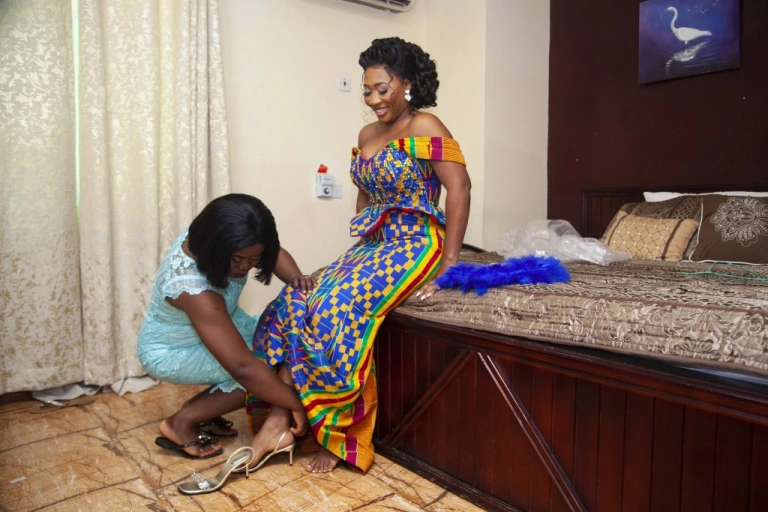
The Timeless Allure of the Fatia Fata Nkrumah Kente Cloth
In the vast and varied world of kente patterns, few carry the historical weight and emotional resonance of the Fatia Fata Nkrumah. This iconic kente cloth, with its distinctive design and profound symbolism, has become one of the most recognized and beloved patterns in Ghana and across the African diaspora. Named in honor of Ghana's first president, Dr. Kwame Nkrumah, the Fatia Fata Nkrumah is more than a textile — it is a wearable monument to leadership, vision, and the enduring spirit of African independence.
The Origin of the Fatia Fata Nkrumah
The Fatia Fata Nkrumah pattern was created in the early years of Ghana's independence, a period of immense national pride and cultural renaissance. As Ghana became the first sub-Saharan African nation to gain independence from colonial rule in 1957, the country experienced a surge of artistic and cultural expression. Kente weaving, already a vital tradition in the Ashanti and Ewe communities, became a vehicle for expressing the new nation's identity and aspirations.
The pattern was designed by master weavers who wanted to create a kente cloth that honored Dr. Kwame Nkrumah, the visionary leader who had led Ghana to independence and who envisioned a united, prosperous Africa. The name "Fatia Fata Nkrumah" translates roughly from the Akan language as "Fatia is befitting for Nkrumah" or "Nkrumah deserves Fatia," referring to the cloth as a mark of honor and respect for the leader.
Some accounts trace the pattern's creation to the weaving village of Bonwire in the Ashanti Region, which has been the heartland of kente weaving for centuries. The master weavers of Bonwire were commissioned to create a cloth that would capture the spirit of the new nation and the reverence felt for its founding father.
Understanding the Pattern
The Fatia Fata Nkrumah is instantly recognizable to anyone familiar with kente. Its design features a striking combination of colors and geometric patterns that set it apart from other kente cloths. While specific color arrangements can vary, the pattern typically incorporates:
- Gold: Representing royalty, wealth, and the high status of Nkrumah as a leader of extraordinary stature. Gold also symbolizes the richness of Ghana's culture and natural resources.
- Black: Symbolizing maturation, spiritual energy, and the deep wisdom that Nkrumah brought to his leadership. Black also honors the ancestral traditions from which Nkrumah drew his strength.
- Green: Representing the lush land of Ghana, agricultural abundance, and the growth and renewal that independence promised.
- Red: Acknowledging the sacrifices made in the struggle for independence and the revolutionary spirit that drove the independence movement.
The geometric patterns within the cloth typically feature bold, symmetrical designs that convey a sense of order, stability, and grandeur. The overall effect is a cloth that commands attention and communicates authority, respect, and cultural depth.
Famous Wearers and Cultural Moments
The Fatia Fata Nkrumah has been worn by some of the most prominent figures in Ghanaian and African history. Its association with Dr. Nkrumah himself has given it an almost sacred status in certain contexts.
Dr. Kwame Nkrumah was frequently seen in kente cloth during state functions, pan-African conferences, and public addresses. While he wore many different kente patterns throughout his life, the Fatia Fata Nkrumah became particularly associated with his image and legacy. Photographs of Nkrumah draped in this magnificent cloth have become some of the most iconic images of African leadership.
In the decades since Nkrumah's time, the Fatia Fata Nkrumah has been worn by:
- Heads of state and political leaders: Ghanaian presidents and other African leaders have worn the cloth at inaugurations, state visits, and national celebrations as a tribute to Nkrumah's legacy.
- Cultural figures and intellectuals: Scholars, artists, and cultural leaders have adopted the cloth as a symbol of pan-African identity and intellectual heritage.
- Diaspora communities: In the Americas, the Caribbean, and Europe, the Fatia Fata Nkrumah has become a powerful symbol of connection to African roots. It is worn at cultural celebrations, Martin Luther King Jr. Day events, Black History Month gatherings, and other occasions that honor African heritage.
- Graduates and young leaders: Many young Ghanaians and members of the African diaspora choose the Fatia Fata Nkrumah for their graduation ceremonies, seeing it as a way to honor the past while stepping into the future.
The Cultural Significance of the Fatia Fata Nkrumah
Beyond its association with Nkrumah, the Fatia Fata Nkrumah carries broader cultural significance that resonates with anyone who values leadership, vision, and cultural pride.
The cloth embodies several key themes:
- Leadership and legacy: It celebrates the idea that great leaders deserve to be honored through art, and that their legacy can be preserved and transmitted through cultural objects like kente cloth.
- Independence and self-determination: The cloth is a reminder of the moment when Ghana broke free from colonial rule and charted its own course. It represents the possibility of self-determination and the courage required to pursue it.
- Cultural continuity: By creating a new kente pattern to honor a modern leader, the weavers demonstrated that kente is a living tradition capable of reflecting contemporary events and values.
- Pan-African unity: The cloth's association with Nkrumah's vision of a united Africa gives it a pan-African dimension that extends beyond Ghana's borders, making it a symbol of collective African identity and aspiration.
The Fatia Fata Nkrumah in Contemporary Fashion
In recent years, the Fatia Fata Nkrumah has found new life in contemporary fashion and design. Fashion designers have incorporated the pattern into modern garments, accessories, and home décor items, introducing it to new audiences while maintaining its cultural integrity.
At Hinkro Kente, we have seen growing interest in the Fatia Fata Nkrumah from clients who want to honor its historical significance while incorporating it into their personal style. Whether as a traditional toga-style wrap, a tailored suit lining, a fashion accessory, or a framed art piece, the Fatia Fata Nkrumah continues to captivate and inspire.
Acquiring an Authentic Fatia Fata Nkrumah
Because of its popularity, the Fatia Fata Nkrumah is one of the most frequently imitated kente patterns. Mass-produced versions, often printed on machine-made fabric, flood markets around the world. While these imitations may capture the general look of the pattern, they lack the depth, texture, and cultural integrity of a genuine handwoven cloth.
An authentic Fatia Fata Nkrumah should be:
- Handwoven: Each strip should show the slight variations and textures characteristic of handloom weaving.
- Woven from quality threads: The colors should be vibrant and the threads should have a natural luster.
- Constructed with precise owontoma borders: The edges of each strip should feature the tightly woven border bands that are a hallmark of quality kente.
- Sewn from multiple strips: A full kente cloth is assembled from many individual strips sewn together. The alignment and stitching should be clean and even.
At Hinkro Kente, every Fatia Fata Nkrumah we produce meets these standards. Our master weavers craft each cloth with the care and skill that this iconic pattern deserves, ensuring that every piece is a worthy tribute to the leader and the tradition it honors.
A Cloth That Endures
The Fatia Fata Nkrumah has endured for decades, transcending its origins to become a universal symbol of African pride, leadership, and cultural excellence. It reminds us that great art has the power to capture a moment in history and carry it forward through time, inspiring new generations to dream, to lead, and to honor the legacy of those who came before them.
At Hinkro Kente, we are proud to continue the tradition of weaving the Fatia Fata Nkrumah. Every cloth we produce is a thread in the ongoing story of this remarkable pattern — a pattern that began as a tribute to a great leader and has grown into a testament to the enduring power of African culture.