
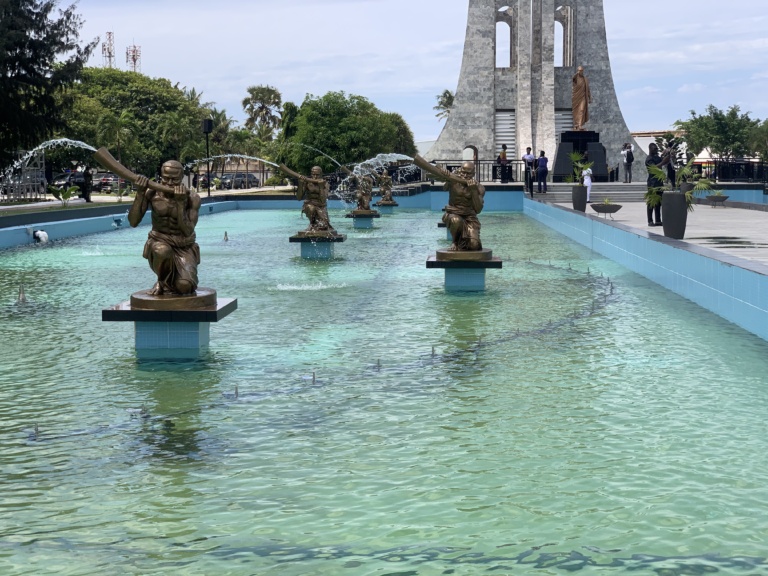
Rediscovering History: The Revamped Kwame Nkrumah Memorial Park
In the heart of Accra, on the grounds where Ghana's first president once addressed the nation, stands the Kwame Nkrumah Memorial Park — a site that has recently undergone a stunning transformation. The revamped park is more than a renovation; it is a renewed invitation to Ghanaians and visitors alike to reconnect with the vision, courage, and pan-African ideals of Dr. Kwame Nkrumah. And woven through the fabric of this renewed space, quite literally, is kente cloth — the textile that adorned Nkrumah himself and continues to symbolise the Ghanaian identity he fought to elevate on the world stage.
A Brief History of the Park
The Kwame Nkrumah Memorial Park was originally inaugurated in 1992 on the site of the former Accra Polo Ground — the very place where Nkrumah declared Ghana's independence on 6th March 1957, making it the first sub-Saharan African country to gain independence from colonial rule. The park was established to honour Nkrumah's legacy as a liberation leader, pan-Africanist, and the architect of modern Ghana.
The original park featured a mausoleum housing Nkrumah's remains, a museum with personal artefacts, and manicured grounds with fountains and gardens. However, over the years, the facility had begun to show its age, and the need for restoration became increasingly apparent.
The Renovation: A Bold Renewal
The Ghanaian government's decision to revamp the memorial park was driven by a desire to create a world-class memorial that truly reflects the magnitude of Nkrumah's legacy. The renovation encompassed:
- Modernised museum facilities — state-of-the-art displays with multimedia presentations that bring Nkrumah's story to life for new generations.
- Enhanced gardens and landscaping — expanded green spaces that create a more contemplative and welcoming atmosphere.
- Improved visitor infrastructure — new entrance facilities, accessibility upgrades, and visitor services.
- Cultural integration — deliberate incorporation of Ghanaian artistic and architectural elements throughout the park, including kente motifs in design elements.
The revamped park has been widely praised as a fitting tribute to one of Africa's most consequential leaders.
Cultural Significance of the Park
The Kwame Nkrumah Memorial Park holds a unique place in Ghanaian and African consciousness:
- Independence ground — the site itself is sacred in Ghanaian history, marking the birthplace of the nation's sovereignty.
- Pan-African symbol — Nkrumah's vision extended beyond Ghana to the unity of all African peoples. The park embodies this vision and serves as a gathering point for pan-African discourse.
- Educational resource — for Ghanaians and international visitors, the park provides essential context for understanding the independence movement, the challenges of post-colonial governance, and the ongoing pursuit of African development.
- Symbol of resilience — the park's renewal mirrors the broader narrative of African renaissance — the determination to restore, revamp, and reimagine Africa's heritage for the future.
Kente's Role in Nkrumah's Legacy
Kente cloth played a pivotal role in Kwame Nkrumah's public identity. As the first president of independent Ghana, Nkrumah deliberately and strategically wore kente on the world stage, transforming it from a royal Ashanti textile into a symbol of African independence and dignity. Some of the most iconic images of Nkrumah show him in kente — addressing crowds at the Polo Ground, meeting world leaders, and representing Ghana at the United Nations.
Nkrumah understood the power of visual symbolism. By wearing kente, he communicated that Africa had its own traditions of excellence, governance, and artistry — traditions that did not need validation from the West. This strategic use of kente helped elevate the fabric from a Ghanaian cultural treasure to a global symbol of African pride.
The revamped park honours this legacy by incorporating kente imagery and motifs throughout its design. Kente patterns appear in architectural elements, display graphics, and decorative features, creating a visual continuity between the park's spaces and the cultural identity of the leader it commemorates.
Kente and the Visitor Experience
Visitors to the revamped park often encounter kente in multiple ways:
- Historical photographs — the museum displays include photographs of Nkrumah wearing kente, with explanatory panels about the cloth's significance.
- Gift shop — authentic kente pieces are available for purchase, allowing visitors to take home a piece of the cultural experience.
- Cultural events — park events and ceremonies frequently feature kente in both ceremonial dress and decorative contexts.
- Architectural references — kente-inspired geometric patterns appear in the park's design elements, from floor tiles to wall installations.
A Living Legacy
The Kwame Nkrumah Memorial Park is not merely a museum of the past — it is a living space that continues to evolve. School groups visit to learn about independence, international tourists come to understand Ghana's history, and Ghanaians use the park as a place of reflection and cultural affirmation. The inclusion of kente in the park's fabric ensures that every visitor encounters this extraordinary textile and the values it represents.
Experience the Connection
If you are planning a visit to the Kwame Nkrumah Memorial Park, consider wearing kente to honour the occasion — it is, after all, exactly what Nkrumah himself would have done. And if you need an authentic piece for the visit, Hinkro Kente offers a curated collection of kente stoles, wraps, and accessories that connect you to the same tradition that Nkrumah championed. Browse our collection and wear your heritage with the same pride that built a nation.